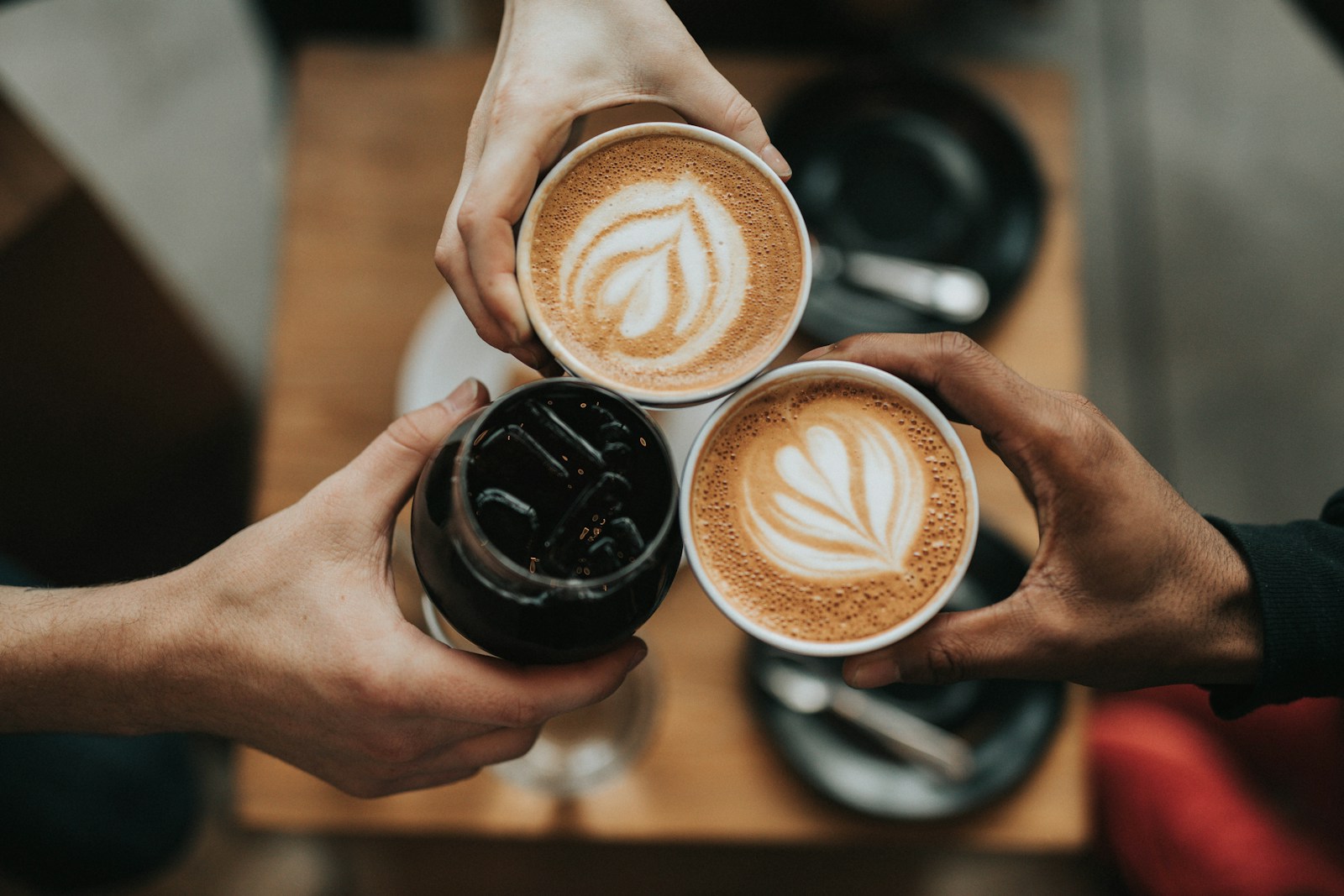
Neuroscience and ancient tradition agree: the act of preparing something carefully, slowly, with attention, changes what it becomes.
There is a moment, usually somewhere between grinding the beans and the first pour, where the morning stops being a series of tasks to complete and becomes something else. The sound of water at temperature. The bloom expanding. The slow, deliberate circle of the kettle. Most people who make coffee this way can't quite explain why they do it. They only know they'd miss it.
That sensation has a name and a mechanism. It's not sentimentality. It's neuroscience.
What Ritual Does to the Brain
A 2017 study published in Psychological Science found that people who engaged in personal rituals before consuming food and drink rated their experience as more enjoyable and more flavorful than those who simply consumed the same thing without ceremony. The act of preparation — measured, sequential, intentional — changes the experience of the thing being prepared. Not because the thing changed. Because the person did.
Ritual activates what researchers call "psychological ownership" — the sense that the object of a ritual belongs to you in a way that a randomly acquired thing does not. A cup of coffee handed to you at a counter is something you consume. A cup of coffee you prepared — ground, bloomed, poured at the right temperature in the right time — is something you made. The difference is categorical, and it shows up in fMRI scans as clearly as it shows up in taste preference tests.
The care you put into the cup is not separate from the taste. It is part of it.
There is also the dopamine dimension. Anticipation — the structured waiting that ritual creates — activates reward circuits before the reward arrives. You are, in the clinical sense, getting a neurochemical return on the patience the ritual requires. The bloom isn't just letting CO₂ escape. It's also making the first sip better before you've taken it.
The Ancient Agreement
This is not a modern discovery. Every culture that developed a coffee or tea tradition built ceremony into it — not despite the absence of scientific explanation, but because the ceremony was observably doing something.
The Japanese tea ceremony, chado, is four centuries old and was never about efficiency. Its eight primary principles — harmony, respect, purity, tranquility, and four more — have nothing to do with making tea taste better by any measurable chemical standard. They have everything to do with what you bring to the cup and what you leave in the room when you sit down with it.
The Ethiopian coffee ceremony — jabena — is similarly structured: three rounds of coffee served in sequence, the final cup a blessing. It takes two hours. The participants understand that the duration is not a cost. It is the product.
Across cultures, across centuries, across wildly different brewing methods, the same insight keeps surfacing: the how and the who of preparation are not incidental to the experience. They are the experience.

Making the Ritual Yours
The ritual doesn't have to be elaborate. What matters is that it's consistent, intentional, and entirely yours.
For some people this means grinding whole beans the morning of rather than the night before — not because pre-ground coffee is unacceptably worse (though it is somewhat worse), but because the grinding is a moment. A sound. A signal to the nervous system that this is happening now, and it matters. For others it means using the same vessel every morning, the same kettle, the same sequence. The consistency of the ritual is what creates its weight.
Whatever your method, consider these as non-negotiables: use water that has come off the boil for 30 to 45 seconds (off at 100°C, down to about 93°C). Bloom the coffee first if you're brewing filter. Measure. Not obsessively — but with enough attention that you're not on autopilot.
Autopilot is for tasks you want to disappear. A ritual is a task you want to inhabit.
The goal is not a better cup of coffee, technically speaking — though you will produce a better cup. The goal is a better morning. A few minutes of genuine presence before the day begins asking things of you. A practice that is small enough to do every day and rich enough to be worth doing.
You already have a morning habit. Most of us do. The only question is whether you've made it a ritual yet.